What is a cracked tooth?
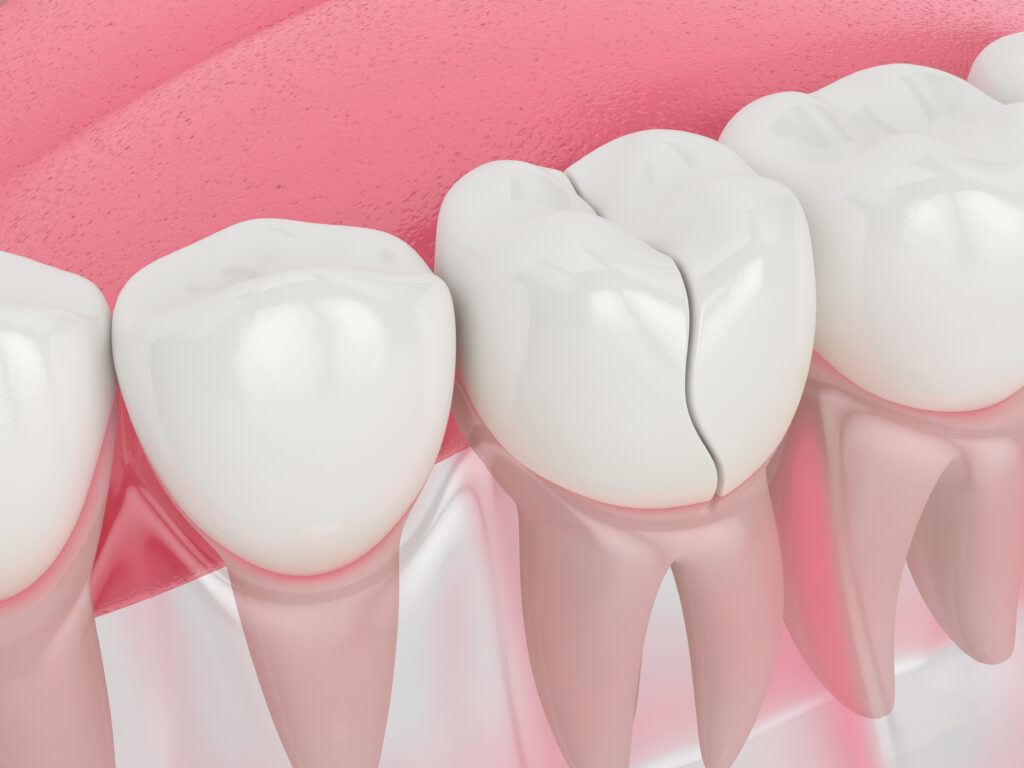
A cracked tooth has a small, incomplete crack that is often too tiny to see. Like a crack in a windshield, it can start small and slowly spread. It can be hard to diagnose because the pain may come and go and can feel like other dental problems.
Types of cracked teeth
Dentists usually group cracks into five main types:
- Craze lines: Tiny surface lines in the enamel; harmless and painless.
- Fractured cusp: A corner (cusp) of the tooth breaks off; usually treatable.
- Cracked tooth: A crack starts on the chewing surface and moves toward the root; needs close attention.
- Split tooth: The tooth breaks into separate pieces; often cannot be saved.
- Vertical root fracture: A crack starts in the root; often found late.
What causes a tooth to crack?
Cracks usually happen from a mix of factors over time, such as:
- Wear and tear: Years of chewing, clenching or grinding (bruxism).
- Chewing hard objects: Ice, hard candy, bones and similar items.
- Large fillings: Big fillings can weaken the tooth.
- Weakened tooth structure: Due to age or past dental work.

Common symptoms
Cracked tooth pain can be confusing because it is not always consistent.
Main symptom: pain when biting, especially on release
- Often a sharp, sudden “zap” when you bite down or let go.
- This happens because the crack opens slightly under pressure and then closes, irritating the nerve.
Other possible symptoms
- Cold sensitivity (and sometimes heat sensitivity).
If the crack reaches the nerve, you may experience:
- Spontaneous pain (hurts without chewing).
- Referred pain (feels like it is coming from another tooth or area).
- In advanced cases: visible crack, constant ache or a gum discomfort/abscess.

Why is it hard to find?
Cracks are often hidden, so dentists may use:
- Bite test: You bite on a small tool to find the painful spot.
- Bright light (transillumination): Light shows the crack as a dark line.
- Trial splint or temporary crown: If covering the tooth stops the pain, it strongly suggests a crack
Treatment: what usually happens
- Confirm and calm the tooth: trial splint
- A temporary band, resin composite coating or temporary crown may be placed.
- If the pain improves, it supports the cracked‑tooth diagnosis and protects the tooth while planning treatment.
- Protect the tooth long‑term: crown/cap
- A crown is the most common long‑term solution.
- It wraps the tooth and holds it together, reducing stress on the crack.

- If the nerve is involved: root canal + crown
- If the crack reaches the pulp (nerve area), a root canal may be needed first.
- After a root canal, a crown is especially important because the tooth can become more brittle.
- If the tooth cannot be saved: extraction
Removal may be necessary if:
- The crack goes down the root below the gumline.
- The tooth is fully split.
- There is severe bone loss.Replacement options may include an implant or a bridge.
Prevention tips
You can lower your risk by:
- Avoiding chewing hard items (for example, ice and hard candy).
- Wearing a night guard if you grind or clench.
- Fixing bite issues if your dentist recommends it.
Key takeaway
Cracked tooth pain often appears as sharp, brief pain while chewing, especially when no cavity is found. Mention the possibility of a crack to your dentist—early diagnosis often means simpler, more predictable treatment.