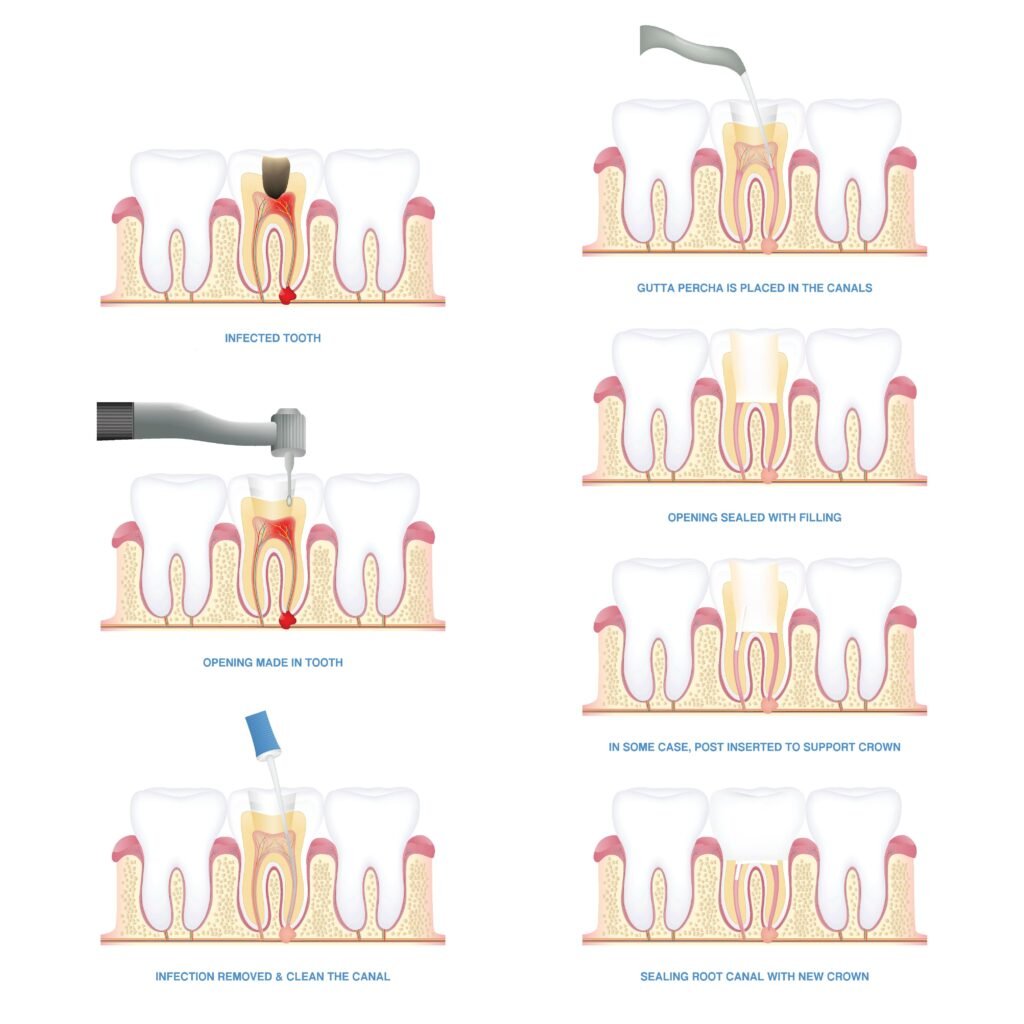
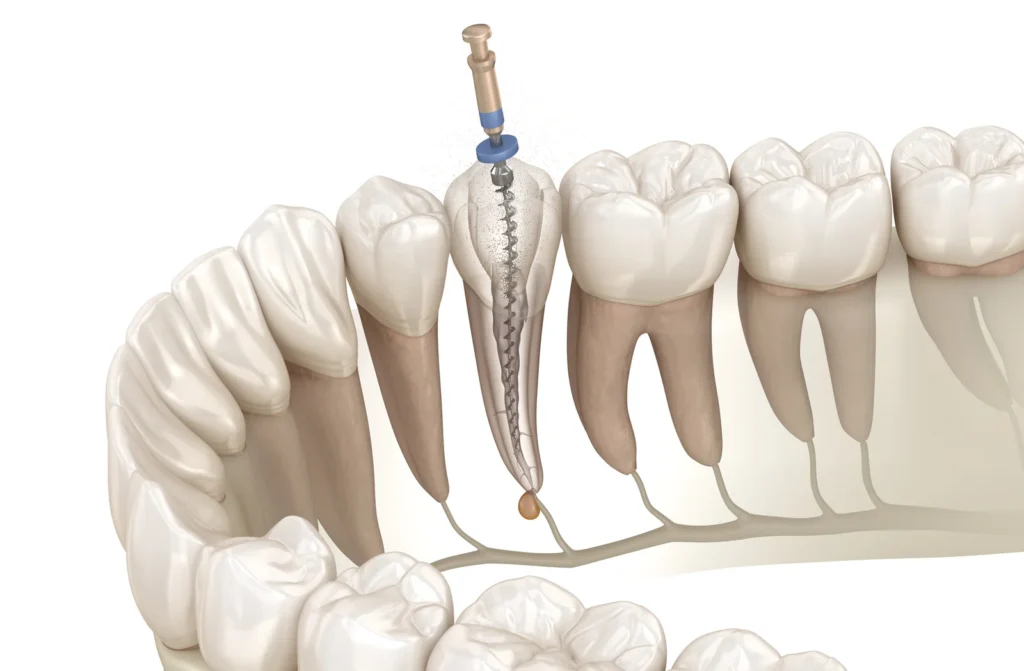
Root Canal Treatment (RCT), also known as “杜牙根” in Chinese, is a dental procedure designed to save a severely infected or damaged tooth.
It involves removing the infected or inflamed pulp (nerve and blood vessels) from the tooth’s interior, cleaning and disinfecting the root canal, and sealing it to prevent further infection.
RCT is recommended when the tooth’s pulp becomes infected or inflamed due to deep decay, trauma, or repeated dental procedures.
If left untreated, the infection can spread, leading to abscesses, bone loss, or even tooth loss. RCT helps preserve the natural tooth and alleviate pain.
Symptoms include:
Please consult your dentist to make an accurate diagnosis and treatment plan.

Step-by-Step RCT Procedure:
1. Is RCT painful?
No. The procedure is performed under local anesthesia, ensuring minimal discomfort.
Post‑treatment soreness is normal but manageable with painkillers.
2. How long does RCT take?
The procedure typically requires multiple visits, depending on the tooth’s condition and complexity.
3. How long does it take for the tooth to feel normal after an RCT visit?
Within a few days for most cases.
4. Can RCT fail?
While RCT has a success rate ranging from 85% to 95%, failure can occur due to missed canals, reinfection, or improper sealing.
Regular follow‑ups help monitor the treated tooth.
5. How much does RCT cost?
The cost varies based on factors like tooth type, complexity, and location.
Consult your dentist for a detailed estimate.
6. Can I eat normally after RCT?
Avoid chewing hard foods immediately after RCT.
Once the crown is placed, you can resume normal eating, but avoid excessive force on the treated tooth.
7. Will the tooth decay again after RCT?
Yes, the tooth can still decay.
Maintain good oral hygiene, regular check‑ups, and avoid sugary foods to protect the treated tooth.
8. Can pregnant women undergo RCT?
It’s safer to undergo RCT during the second trimester (4–6 months) of pregnancy.
Non‑urgent treatments should be postponed until after delivery.
9. Why do I still feel sensitivity after RCT?
Sensitivity may occur if adjacent teeth or gum tissues are affected.
It could also indicate incomplete healing. Consult your dentist for evaluation.
Is RCT painful?
No. The procedure is performed under local anesthesia, ensuring minimal discomfort.
Post‑treatment soreness is normal but manageable with painkillers.
How long does RCT take?
The procedure typically requires multiple visits, depending on the tooth’s condition and complexity.
How long does it take for the tooth to feel normal after an RCT visit?
Within a few days for most cases.
Can RCT fail?
While RCT has a success rate ranging from 85% to 95%, failure can occur due to missed canals, reinfection, or improper sealing.
Regular follow‑ups help monitor the treated tooth.
How much does RCT cost?
The cost varies based on factors like tooth type, complexity, and location.
Consult your dentist for a detailed estimate.
Can I eat normally after RCT?
Avoid chewing hard foods immediately after RCT.
Once the crown is placed, you can resume normal eating, but avoid excessive force on the treated tooth.
Will the tooth decay again after RCT?
Yes, the tooth can still decay.
Maintain good oral hygiene, regular check‑ups, and avoid sugary foods to protect the treated tooth.
Can pregnant women undergo RCT?
It’s safer to undergo RCT during the second trimester (4–6 months) of pregnancy.
Non‑urgent treatments should be postponed until after delivery.
Why do I still feel sensitivity after RCT?
Sensitivity may occur if adjacent teeth or gum tissues are affected.
It could also indicate incomplete healing. Consult your dentist for evaluation.
+852 9532 1766
Room 1605, Island Beverley, 1 Gloucester Road, Causeway Bay, Hong Kong
Tuesday to Saturday: 09:30 – 18:30
Sunday and Monday: Closed (but messages will still be replied)
© 2026 DR. ROMAINE NG, All Rights Reserved