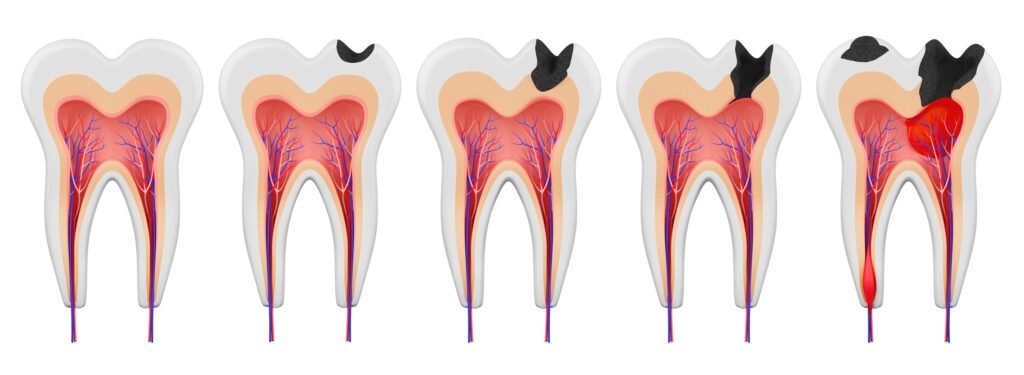
A dental filling is a restorative procedure used to repair teeth damaged by decay, cracks, or wear.
The dentist removes the decayed portion of the tooth and fills the cavity with a suitable material to restore its shape, function, and appearance.
Fillings can also be used for aesthetic purposes, such as closing gaps between teeth, correcting discoloration, or modifying the shape or anatomy of a tooth.
Fillings are recommended for:
Common filling materials include:
| Filling Type | Pros | Cons |
Composite Resin (Tooth-Colored Fillings) | – Aesthetics: Matches natural tooth color, ideal for front teeth. | – Durability: Less durable than amalgam, especially in high-pressure areas. |
Amalgam (Silver Fillings) | – Durability: Highly durable and long-lasting. | – Aesthetics: Silver color is noticeable and less appealing for visible teeth. |
Glass Ionomer | – Fluoride release: Helps prevent further decay. | – Strength: Less durable and not suitable for high-pressure areas like molars. |
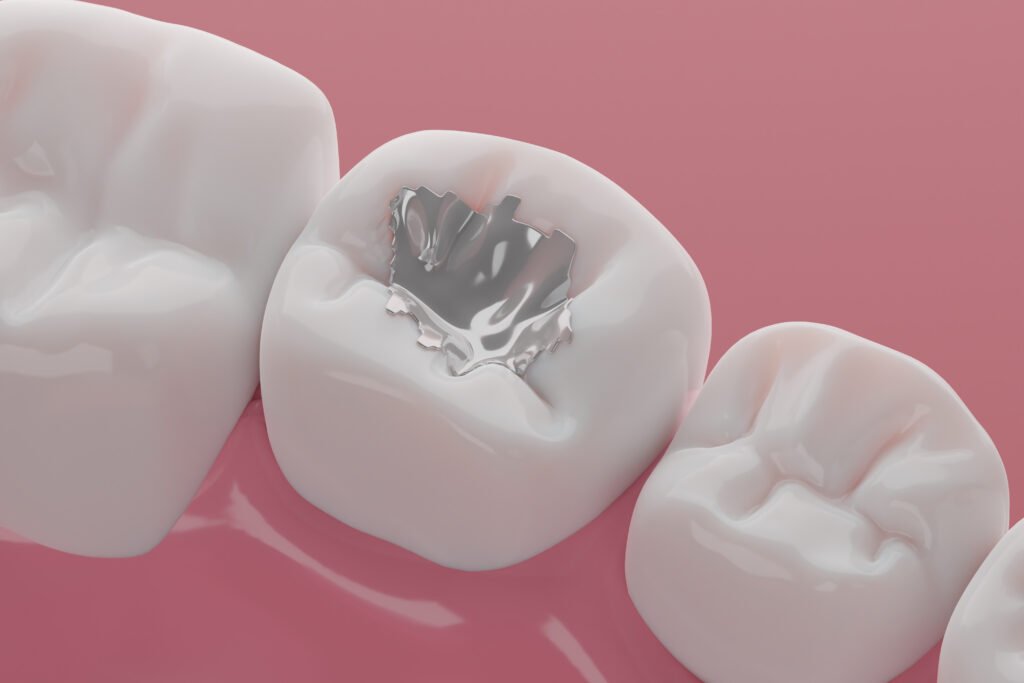
Amalgam
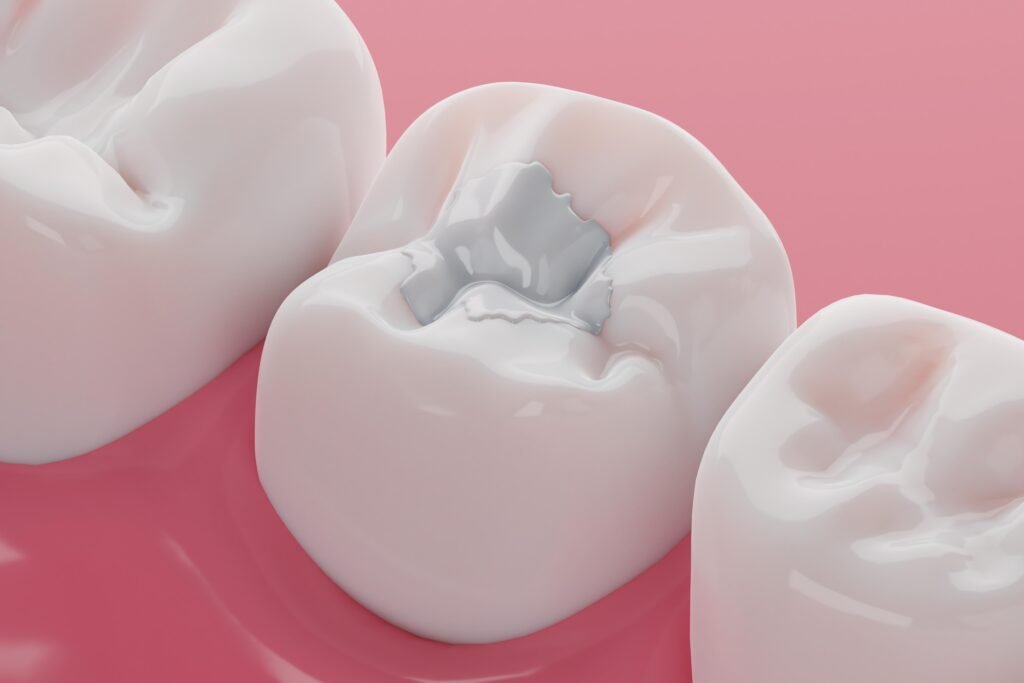
Composite Resin / Glass Ionomer
1. Does getting a filling hurt?
The procedure is generally painless, especially if anesthesia is used.
For minor fillings or superficial decay, patients may experience minimal discomfort.
Not all filling procedures require anesthesia.
Anesthesia is typically used for deep cavities or for patients who are less tolerant of pain.
For minor fillings or superficial decay, anesthesia may not be necessary.
2. Can a filled tooth get decayed again?
Yes, a filled tooth can still develop decay around the edges of the filling.
Maintaining good oral hygiene and regular dental visits can help prevent this.
3. How can I prevent the need for fillings?
– Regular dental check‑ups:
Early detection of cavities through clinical examination and X‑rays can prevent extensive decay and costly treatments.
– Good oral hygiene:
Brush twice daily with fluoride toothpaste and floss daily.
– Balanced diet:
Limit sugary and acidic foods and drinks.
– Fluoride use:
Use fluoride mouthwash or treatments as recommended by your dentist.
– Sealants:
Consider dental sealants for deep grooves in molars to prevent decay.
4. What are the benefits of early detection and treatment?
Early detection of tooth decay through regular dental check‑ups and X‑rays allows for:
– Minimally invasive treatment: Smaller cavities require less tooth structure removal.
– Preservation of natural teeth: Timely intervention helps save the tooth from extensive damage or extraction.
5. How can I check for tooth decay?
Regular dental check‑ups are the most effective way to detect tooth decay; the dentist can detect decay clinically and with X‑rays.
However, you can look for signs such as:
– Tooth sensitivity to hot or cold.
– Visible holes or pits in your teeth.
– Discoloration or dark spots.
– Pain when chewing.
If you notice any of these symptoms, consult your dentist for a thorough examination.
6. What is the importance of X‑rays in detecting cavities?
X‑rays are essential for:
– Detecting hidden decay:
Reveal cavities between teeth or under existing fillings that are not visible during a clinical examination.
– Assessing the extent of decay:
Help determine the depth of decay and whether it has reached the tooth’s nerve.
– Planning treatment:
Provide a clear view of the tooth’s structure, aiding in the selection of the most appropriate treatment.
7. How safe are dental X‑rays and how often should I get them?
Dental X‑rays are safe with minimal radiation exposure.
The frequency depends on your oral health needs, typically every 1–3 years depending on the type of X‑ray, or as recommended by your dentist.
8. Can I eat or drink right after getting a filling?
The timing for eating and drinking after getting a filling can vary based on the material used:
– Amalgam fillings:
It is best to wait at least 24 hours before chewing on the side of the mouth where the amalgam filling was placed. This allows the material to harden completely.
– Composite fillings:
You can typically eat or drink right after the filling, as composite materials are set with a blue UV light. However, be cautious with very hot foods and drinks until you are sure the anesthesia has worn off.
– Glass ionomer cement:
Similar to composite fillings, you can usually eat and drink after about 30 minutes. However, these materials can take longer to set fully, so it is advisable to avoid sticky or hard foods for a few hours to ensure the filling stays intact.
9. Why do I feel sensitivity and pain after a filling?
Experiencing sensitivity and pain after a filling is common and often referred to as post‑operative sensitivity. This can occur due to several possible reasons:
– Post‑operative sensitivity:
It is normal to experience some sensitivity after a filling as the tooth adjusts. This sensitivity typically subsides within a few days.
– High filling:
If the filling is slightly too high, it can cause discomfort when biting down.
– Nerve irritation:
The decay may be too extensive and extend to the pulp, which irritates the nerves in the tooth and leads to sensitivity to hot or cold.
– Material reaction:
Some individuals may react to the filling material, resulting in discomfort.
Most sensitivity should resolve within a few days. If it persists or worsens, contact your dentist for further evaluation.
10. How can I repair a chipped tooth?
A chipped tooth can be repaired with a dental filling for minor damage, veneers for aesthetic improvements, or crowns for severe chips.
Your dentist will recommend the best option based on the extent of the damage.
Does getting a filling hurt?
The procedure is generally painless, especially if anesthesia is used.
For minor fillings or superficial decay, patients may experience minimal discomfort.
Not all filling procedures require anesthesia.
Anesthesia is typically used for deep cavities or for patients who are less tolerant of pain.
For minor fillings or superficial decay, anesthesia may not be necessary.
Can a filled tooth get decayed again?
Yes, a filled tooth can still develop decay around the edges of the filling.
Maintaining good oral hygiene and regular dental visits can help prevent this.
How can I prevent the need for fillings?
What are the benefits of early detection and treatment?
Early detection of tooth decay through regular dental check‑ups and X‑rays allows for:
How can I check for tooth decay?
Regular dental check‑ups are the most effective way to detect tooth decay; the dentist can detect decay clinically and with X‑rays.
However, you can look for signs such as:
If you notice any of these symptoms, consult your dentist for a thorough examination.
What is the importance of X‑rays in detecting cavities?
X‑rays are essential for:
How safe are dental X‑rays and how often should I get them?
Dental X‑rays are safe with minimal radiation exposure.
The frequency depends on your oral health needs, typically every 1–3 years depending on the type of X‑ray, or as recommended by your dentist.
Can I eat or drink right after getting a filling?
The timing for eating and drinking after getting a filling can vary based on the material used:
Why do I feel sensitivity and pain after a filling?
Experiencing sensitivity and pain after a filling is common and often referred to as post‑operative sensitivity. This can occur due to several possible reasons:
How can I repair a chipped tooth?
A chipped tooth can be repaired with a dental filling for minor damage, veneers for aesthetic improvements, or crowns for severe chips.
Your dentist will recommend the best option based on the extent of the damage.
+852 9532 1766
Room 1605, Island Beverley, 1 Gloucester Road, Causeway Bay, Hong Kong
Tuesday to Saturday: 09:30 – 18:30
Sunday and Monday: Closed (but messages will still be replied)
© 2026 DR. ROMAINE NG, All Rights Reserved