Orthodontics & Braces
What is Orthodontics?
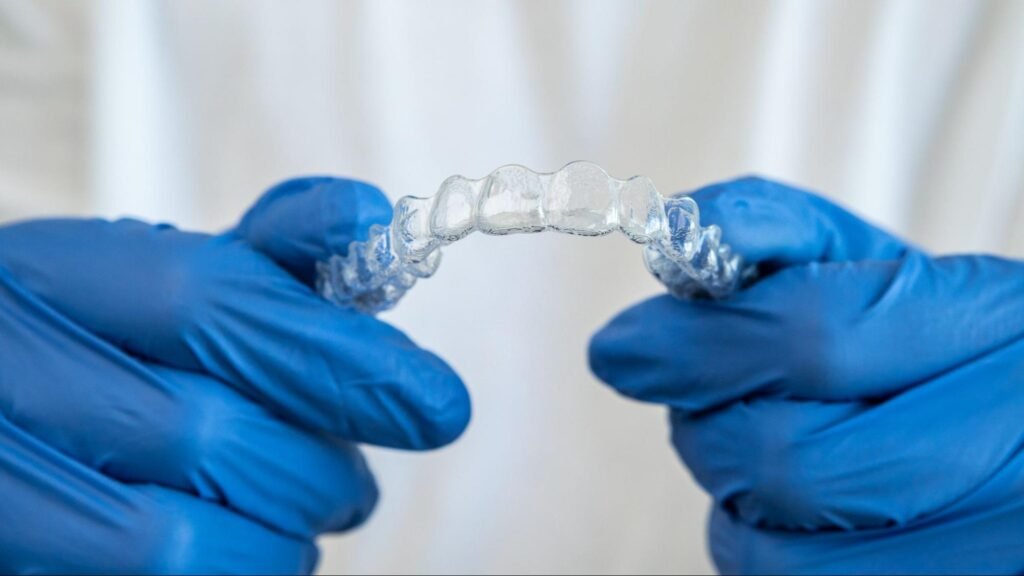
Orthodontics is a branch of dentistry focused on correcting misaligned teeth and improper bite patterns. Using braces or clear aligners, orthodontic treatment improves both the appearance and function of your teeth, promoting long-term oral health.
Why is Orthodontic Treatment Needed?
Orthodontic treatment is necessary to address issues such as overcrowding, gaps between teeth, overbites, underbites, and crossbites. These problems can lead to difficulty in chewing, speech issues, and increased risk of tooth decay and gum disease.
Additionally, some people may experience tooth loss, which can cause neighboring teeth to drift into the empty spaces. This displacement can result in bite issues, functional problems, and difficulties with oral hygiene, making orthodontics essential for restoring proper alignment and improving overall oral health.
What is the difference between Clear Aligners and Traditional Braces?
FEATURE | CLEAR ALIGNERS | TRADITIONAL BRACES |
Appearance | Nearly invisible, clear plastic trays. | Visible metal or ceramic brackets and wires. |
Removability | Removable for eating, brushing, and flossing. | Fixed to teeth, cannot be removed during treatment. |
Comfort | Smooth plastic, less likely to cause irritation inside the mouth. | May cause discomfort or irritation due to brackets and wires. |
Treatment Planning | Treatment is planned with advanced software, allowing precise adjustments. | Adjustments are made periodically during the treatment process. |
Maintenance | Requires discipline—must be worn 20-22 hours a day for effectiveness. | No risk of forgetting to wear, as braces are fixed. |
Adjustments | New aligners are provided every 1-2 weeks to gradually move teeth. | Periodic adjustments are made by an orthodontist. |
Dietary Restrictions | No restrictions—aligners are removed while eating. | Some foods (e.g., sticky or hard foods) should be avoided. |
Treatment Duration | Comparable to braces but varies depending on the case (12-24 months on average). | Similar duration (12-24 months on average), but may vary by case. |
Key Points to Highlight:
- Clear Aligners: Nearly invisible, removable, and comfortable. Treatment is planned using precise software.
- Braces: Fixed, versatile, and adjusted periodically during the treatment process. Visible and require some dietary adjustments.
Common Bite Problems and Treatment Options
Orthodontic treatment addresses various bite and alignment issues that may affect function, aesthetics, and oral health. Below are common problems and their solutions:
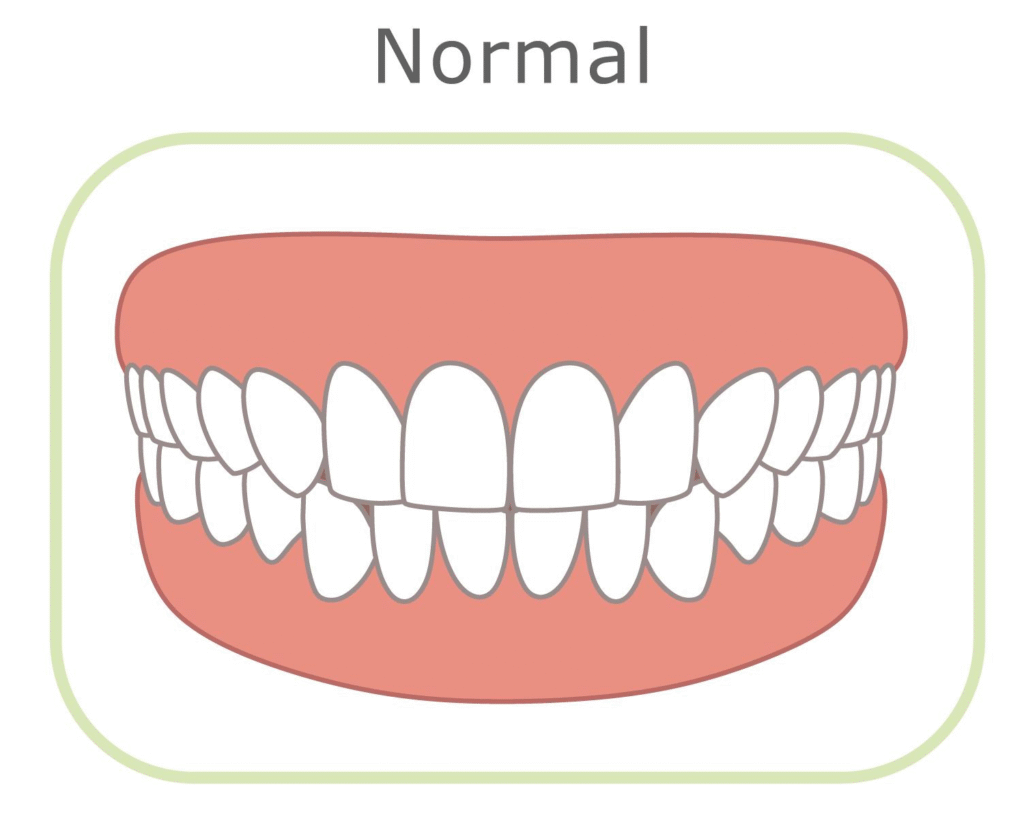
Normal Bite
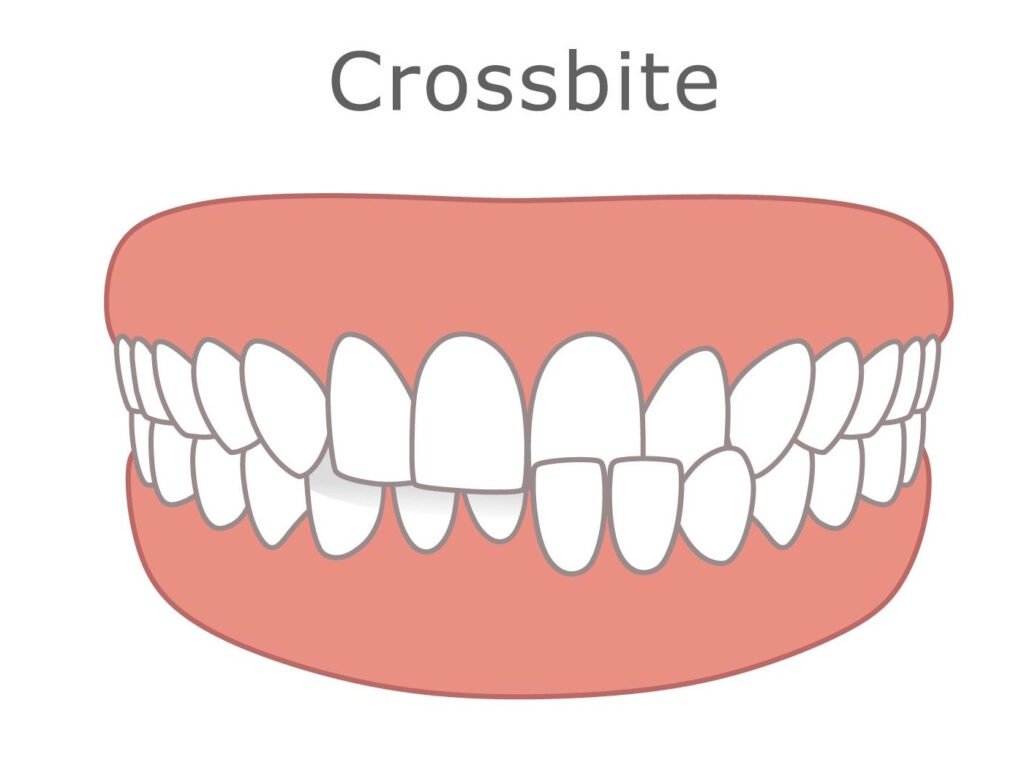
1. Crossbite
What is Crossbite?
A condition where some upper teeth are positioned behind the lower teeth when biting down.
Problems Caused by Crossbite:
- May lead to tooth wear or fractures.
- Overlapping teeth are harder to clean, increasing the risk of gum recession or gum damage.
- Uneven pressure can cause jaw joint discomfort.
Treatment Options:
- Clear aligners can gradually correct crossbite.
- Expanders may be used for children to widen the dental arch.
- Severe cases might require braces combined with other orthodontic tools.
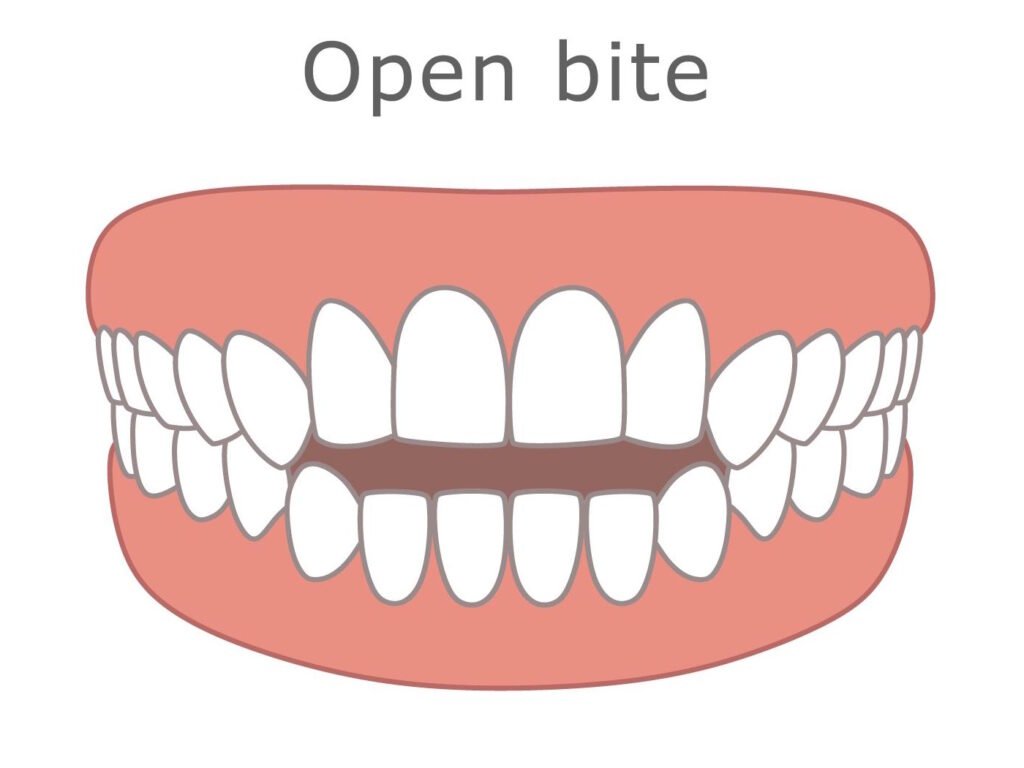
2. Open Bite
What is Open Bite?
A condition where the upper and lower teeth do not meet when the mouth is closed.
Problems Caused by Open Bite:
- Difficulty biting into foods like apples.
- May affect speech and pronunciation.
- Aesthetic and chewing issues.
Treatment Options:
- Clear aligners can gradually close the gap between teeth.
- Severe cases may require surgical intervention.
- Behavioral therapy may help if caused by habits like tongue thrusting.
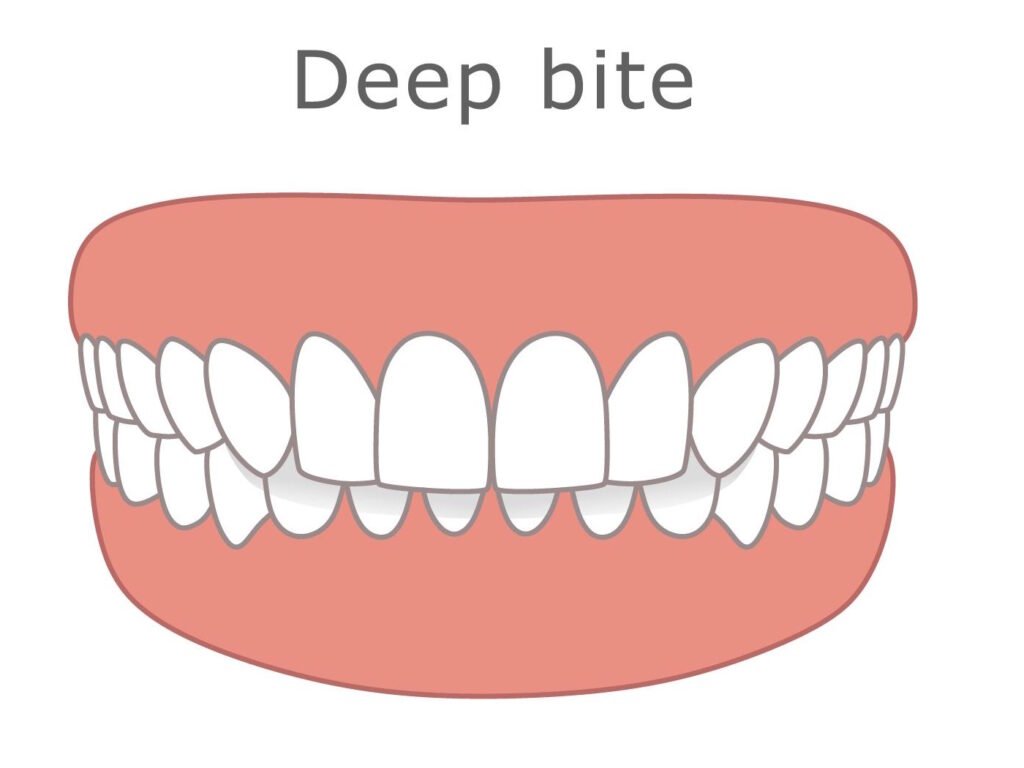
3. Deep Bite
What is Deep Bite?
A condition where the upper teeth excessively overlap the lower teeth.
Problems Caused by Deep Bite:
- Lower teeth may wear down due to excessive overlap.
- May lead to jaw pain or temporomandibular joint (TMJ) issues.
- Aesthetic concerns, such as limited visibility of lower teeth.
Treatment Options:
- Clear aligners can improve the vertical overlap of teeth.
- Braces with bite pads or ramps can correct deep bite.
- Dental reshaping may optimize bite function.
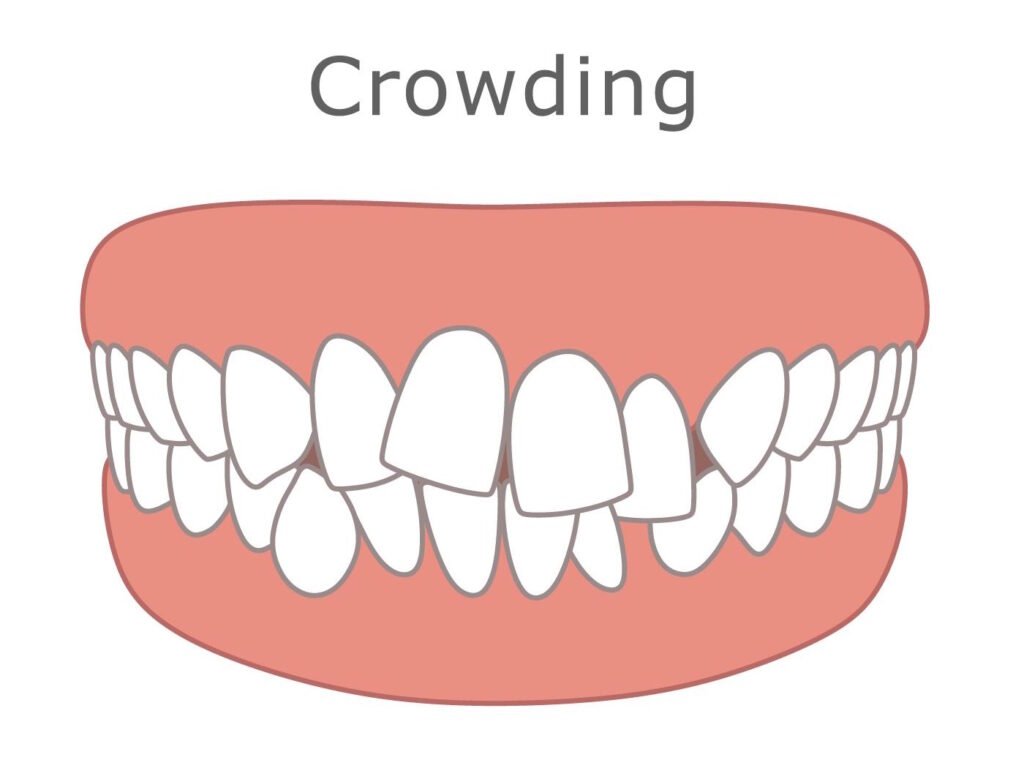
4. Crowding
What is Crowding?
A condition where teeth are misaligned due to insufficient space in the dental arch.
Problems Caused by Crowding:
- Difficulty brushing and flossing, leading to plaque and tartar buildup.
- Higher risk of cavities and gum disease.
- Crowding may worsen over time.
Treatment Options:
- Clear aligners can gradually align crowded teeth.
- Creating space by using ways eg. moving the teeth backwards, polishing the teeth to reduce the size, tooth extractions etc.
- Expanders can widen the arch to accommodate all teeth.
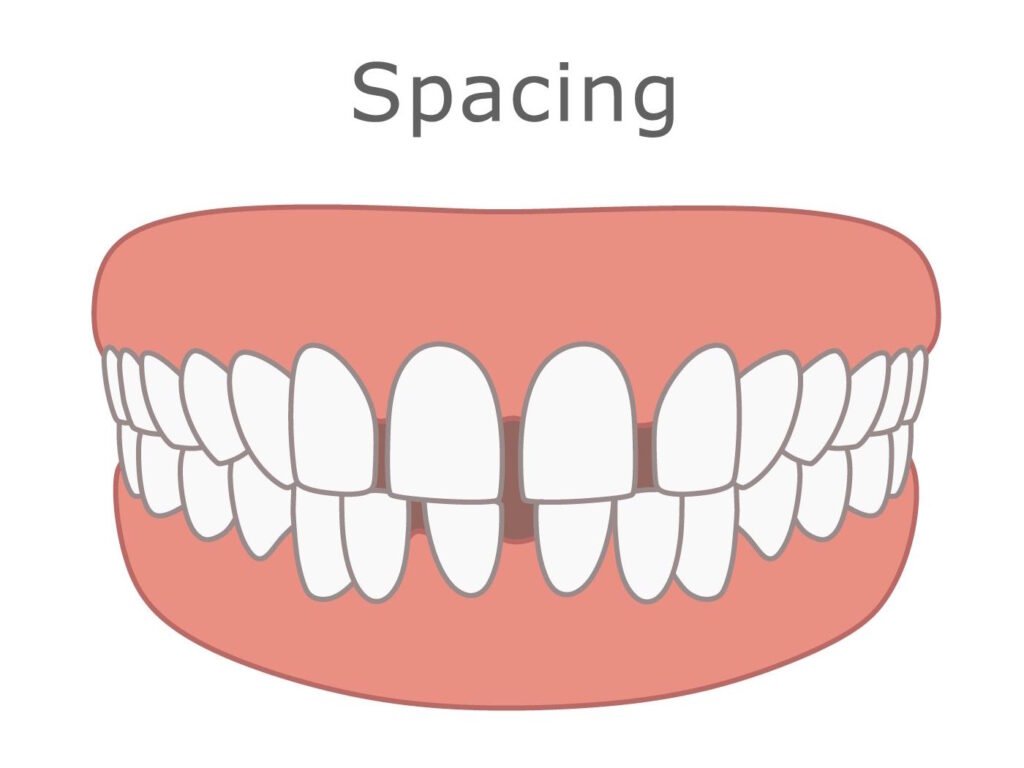
5. Spacing
What is Spacing?
A condition where excessive spaces exist between teeth.
Problems Caused by Spacing Teeth:
- Food can get stuck, causing gum irritation or disease.
- Aesthetic concerns.
Treatment Options:
- Clear aligners can close the gaps between teeth.
- Veneers or fillings may be used for minor spacing issues.
6. Underbite
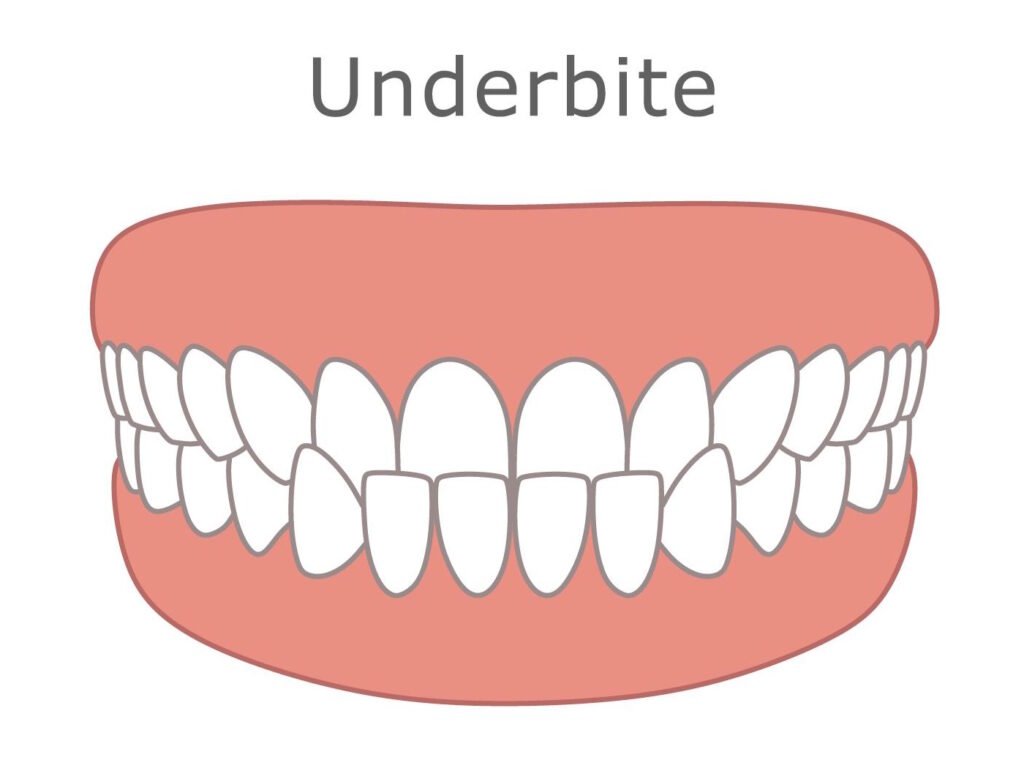
What is Underbite?
A condition where the lower teeth protrude beyond the upper teeth.
Problems Caused by Underbite:
- Difficulty chewing and speaking.
- Accelerated wear of lower teeth.
- Aesthetic concerns and potential jaw pain.
Treatment Options:
- Clear aligners and traditional braces can reposition teeth.
- Severe cases may require a combination of orthodontics and surgery.
- Expanders or headgear can guide jaw growth in children.
- Some cases may require elastics wearing and severe cases may require tooth extraction.
7. Protrusive Front Teeth
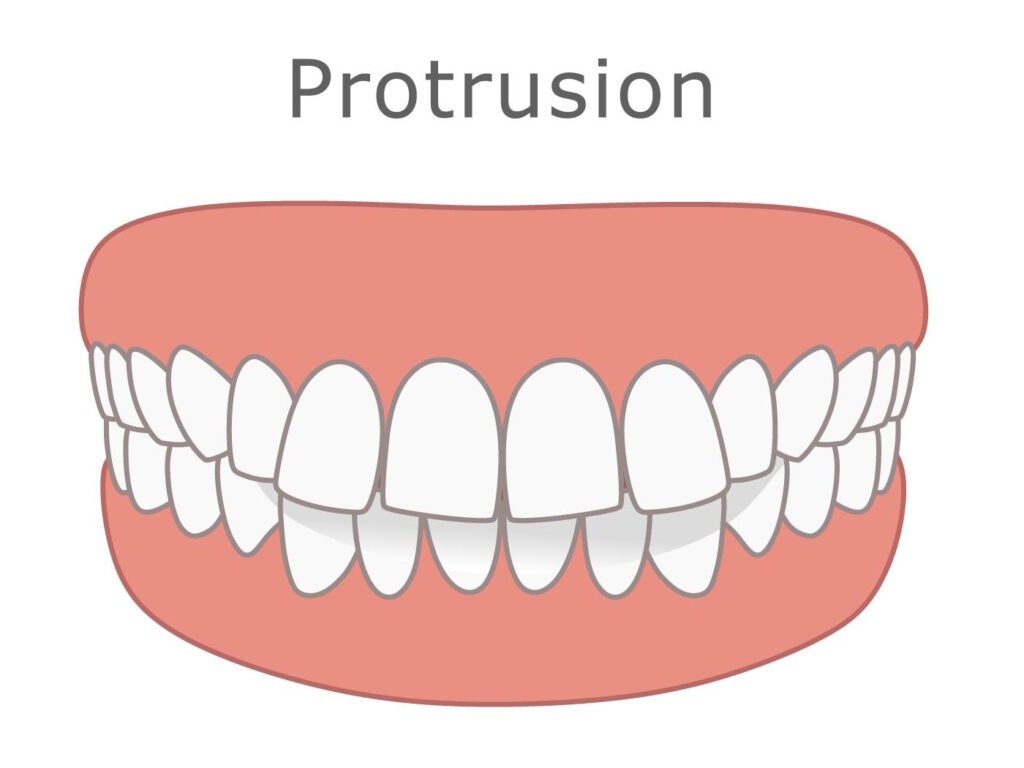
What is Protrusive Front Teeth?
A condition where the front teeth are overcrowded or stick out.
Why Correct This?
- Improves aesthetics and boosts confidence.
- Prevents future alignment problems.
Treatment Options:
- Clear aligners and traditional braces can reposition teeth.
- Some cases may require elastics wearing and severe cases may require tooth extraction.
Clear Aligners Treatment Process
- Consultation:
The patient consults with the dentist to assess their suitability for clear aligners. - Digital Scanning:
A 3D digital scan of the teeth is taken using advanced scanning technology. This scan produces a step-by-step treatment plan to visualize how each tooth moves during treatment. - Custom Aligners:
A series of clear aligners are custom-made based on the digital model. Each aligner is worn for 1-2 weeks, 20-22 hours daily. - Regular Follow–ups:
Periodic check-ups ensure treatment is progressing as planned.
FAQs About Orthodontic Treatment
- Who Needs Orthodontic Treatment?
Orthodontic treatment is suitable for individuals with misaligned teeth, bite issues, or aesthetic concerns. Both children and adults can benefit from orthodontics. - Is Orthodontic Treatment Painful?
Mild discomfort and tenderness may occur initially or during adjustments, usually will return to normal after a few days. (Braces may cause more discomfort and the metal brackets may irritate the mucosa.) - How Long Does Orthodontic Treatment Take?
Treatment duration varies depending on the complexity of the case, ranging from several months to a few years. - Can I Remove Clear Aligners Myself?
Yes, clear aligners are removable, making it easier to eat, brush, and floss. However, they must be worn for 20-22 hours daily for optimal results. - Will I Need to Extract Teeth?
Not all cases require tooth extraction. To create space for proper alignment, orthodontists may use methods like arch expansion, interproximal reduction, or moving teeth backward. - What Happens After Treatment?
Retainers are essential to prevent teeth from shifting back to their original positions. For skeletal issues, further consultations or procedures may be required. - How Can Orthodontics Improve Oral Hygiene and Quality of Life?
Straightened teeth are easier to clean, reducing the risk of cavities and gum disease. Improved oral health leads to better overall health, increased confidence, and a higher quality of life. - Are Older Patients Suitable for Orthodontics?
Yes, older patients can benefit significantly. Tooth loss can cause neighboring teeth to drift into the empty spaces, resulting in bite issues, functional problems, and cleaning difficulties. Orthodontics can restore proper alignment, improve chewing and speech, and make oral hygiene easier. This can lead to better self-confidence, enhanced social interactions, and improved quality of life.
Orthodontics is a personalized treatment that improves alignment, function, and aesthetics. Modern options like clear aligners offer effective and discreet solutions for various alignment and bite problems. Contact our dental clinic for more information or to schedule a consultation.
Orthodontics is a personalized treatment that improves alignment, function, and aesthetics. Modern options like clear aligners offer effective and discreet solutions for various alignment and bite problems. Contact our dental clinic for more information or to schedule a consultation.
Who Needs Orthodontic Treatment?
Orthodontic treatment is suitable for individuals with misaligned teeth, bite issues, or aesthetic concerns. Both children and adults can benefit from orthodontics.
Is Orthodontic Treatment Painful?
Mild discomfort and tenderness may occur initially or during adjustments, usually will return to normal after a few days. (Braces may cause more discomfort and the metal brackets may irritate the mucosa.)
How Long Does Orthodontic Treatment Take?
Treatment duration varies depending on the complexity of the case, ranging from several months to a few years.
Can I Remove Clear Aligners Myself?
Yes, clear aligners are removable, making it easier to eat, brush, and floss. However, they must be worn for 20-22 hours daily for optimal results.
Will I Need to Extract Teeth?
Not all cases require tooth extraction. To create space for proper alignment, orthodontists may use methods like arch expansion, interproximal reduction, or moving teeth backward.
What Happens After Treatment?
Retainers are essential to prevent teeth from shifting back to their original positions. For skeletal issues, further consultations or procedures may be required.
How Can Orthodontics Improve Oral Hygiene and Quality of Life?
Straightened teeth are easier to clean, reducing the risk of cavities and gum disease. Improved oral health leads to better overall health, increased confidence, and a higher quality of life.
Are Older Patients Suitable for Orthodontics?
Yes, older patients can benefit significantly. Tooth loss can cause neighboring teeth to drift into the empty spaces, resulting in bite issues, functional problems, and cleaning difficulties. Orthodontics can restore proper alignment, improve chewing and speech, and make oral hygiene easier. This can lead to better self-confidence, enhanced social interactions, and improved quality of life.