Root Debridement

What is Periodontal Disease?

Periodontal disease (advanced gum disease) is a chronic inflammatory condition affecting the supporting structures of teeth, including gums, periodontal ligament, and alveolar bone.

It’s primarily caused by plaque accumulation that hardens into calculus (tartar) if not removed.

The disease progresses from gingivitis (gum inflammation) to periodontitis, which can lead to irreversible damage such as bone loss and tooth loss.

Symptoms of Periodontal Disease

Early Stage (Gingivitis):

  • Red, swollen, or tender gums
  • Bleeding during brushing or flossing
  • Persistent bad breath (halitosis)

Moderate to Advanced Stage (Periodontitis):

  • Receding gums or teeth appearing longer
  • Loose or shifting teeth
  • Pain while chewing
  • Pus between teeth and gums
  • Deep periodontal pockets
  • Bone loss

Causes of Periodontal Disease

The primary cause is poor oral hygiene, allowing plaque to accumulate. Other contributing factors include:

  1. Lifestyle factors: Smoking, poor diet, stress
  2. Systemic conditions: Diabetes, cardiovascular disease, autoimmune disorders
  3. Hormonal changes: Pregnancy, puberty, menopause
  4. Medications: Drugs reducing saliva flow (antihistamines, antidepressants)
  5. Genetic predisposition: Family history

Diagnosis Methods

A dentist diagnoses periodontal disease through:

  1. Clinical examination: Assessing gum health, measuring pocket depth, checking for bleeding
  2. X-rays: Evaluating bone loss around teeth
  3. Periodontal probing: Using a calibrated probe to measure periodontal pocket depth

Treatment Options

Treatment depends on severity:

  1. Scaling and Polishing: For mild cases, removes plaque and calculus above and below gum line
  2. Root Planing (Deep Cleaning): For moderate cases, smooths root surfaces to remove bacteria
  3. Surgical Treatment: For severe cases, may include flap surgery, bone grafting, or guided tissue regeneration

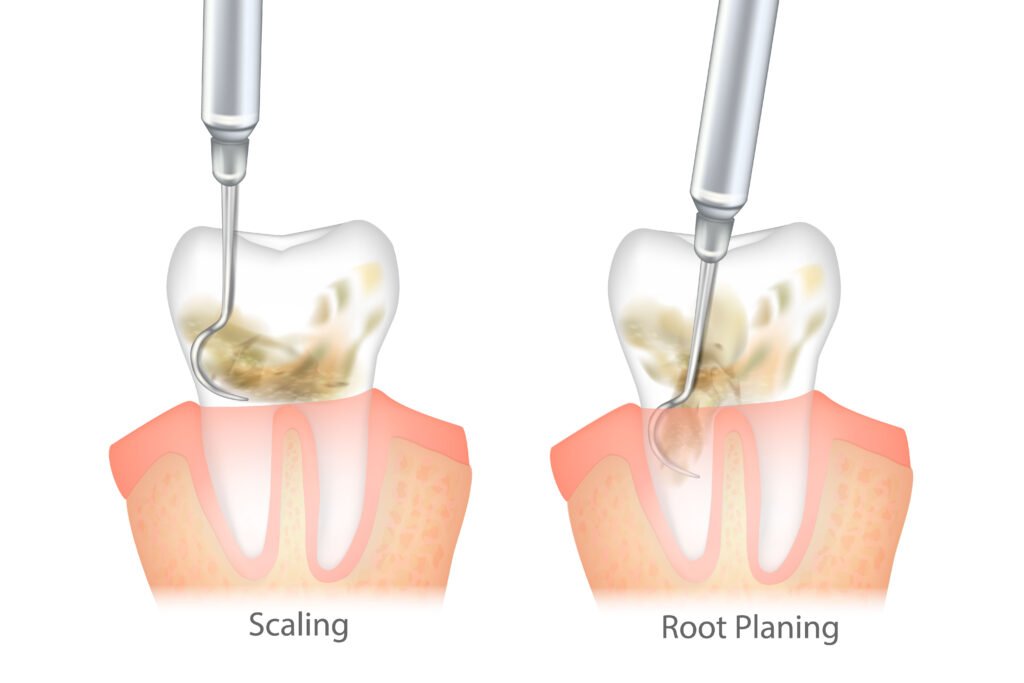
Difference between scaling and root debridement

IMG 0526

Scaling removes plaque and calculus from tooth surfaces.
Root debridement involves more thorough cleaning of root surfaces to remove bacterial toxins and infected tissue to promote healing and gum reattachment.

FAQs About Periodontal Disease