What are dental implants?
Dental implants are the most long-lasting solution for replacing missing teeth.
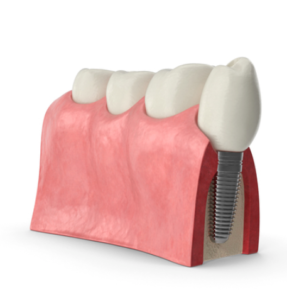
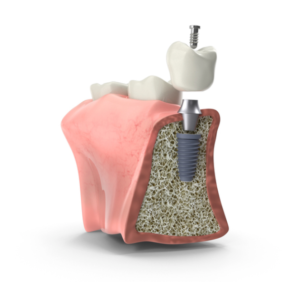
They consist of a titanium post (implant) that is surgically placed into the jawbone, acting as an artificial tooth root. A custom-made crown is then attached to the implant, restoring the appearance and function of a natural tooth.
Benefits of dental implants over bridges and dentures?
Benefits of Dental Implants vs. Bridges vs. Dentures
Durability
| Feature | Dental Implant | Dental Bridge | Removable Denture |
| Longevity | Lifetime potential (20+ years) | 5-15 years | 5-7 years (requires relining/replacement) |
| Bone Preservation | Preserves jawbone integrity | No bone stimulation | May accelerate bone loss |
Procedure
| Feature | Dental Implant | Dental Bridge | Removable Denture |
| Affect adjacent teeth? | Does not require affect adjacent teeth | Requires adjacent teeth modification | Usually does not require affect adjacent teeth |
| Treatment Time | 3-6 months (multiple visits) | 2-3 weeks (2-3 visits) | 1-2 weeks (2-4 visits) |
| Candidacy | Requires adequate bone volume | Requires healthy adjacent teeth | Suitable for most patients |
Maintenance
| Feature | Dental Implant | Dental Bridge | Removable Denture |
| Daily Care | Like natural teeth (brushing & flossing) | Requires floss threaders/special cleaning tools | Daily removal and cleaning |
| Professional Maintenance | Regular dental check-ups | Regular dental check-ups | Regular check-ups & possible adjustments |
Aesthetics
| Feature | Dental Implant | Dental Bridge | Removable Denture |
| Natural Appearance | Most natural-looking | Very natural-looking | Less natural-looking |
| Visible Components | No visible metal | Possible margin visibility | May have visible clasps |
Function
| Feature | Dental Implant | Dental Bridge | Removable Denture |
| Chewing Efficiency | 90-100% of natural teeth | 80-90% of natural teeth | 30-60% of natural teeth |
| Stability | Extremely stable | Very stable | May shift during chewing |
| Comfort | Feels like natural teeth | Very comfortable | May cause sore spots, requires adaptation |
| Speech Impact | No impact | Minimal impact | May affect speech initially |
Procedure for dental implant surgery?
The implant process typically involves the following steps:
- Initial Consultation:
A comprehensive oral examination, including X-rays or 3D scans, to assess bone density and plan the treatment. - Implant Placement:
Under local anesthesia, the titanium implant is surgically placed into the jawbone. (A temporary crown may be fitted.) - Healing Period:
The implant is left to fuse with the jawbone, which takes 3 to 6 months. - Final Crown Placement:
Once healed, an impression is taken to create a custom crown, which is then attached to the implant.
Frequently Asked Questions (FAQs) About Dental Implants
1. How long does the implant process take?
The entire process typically takes 3 to 6 months, depending on the healing time required for the implant to fuse with the jawbone (osseointegration).
In some cases, immediate loading implants may reduce the treatment time.
2. Is the implant procedure painful?
The procedure is performed under local anesthesia, so patients typically feel no discomfort during the surgery.
Post-surgery, mild pain or swelling may occur, which can be managed with prescribed medications.
3. Are dental implants suitable for everyone?
Not everyone is a candidate for implants. Factors such as insufficient bone density, uncontrolled diabetes, or severe gum disease may affect eligibility.
A thorough evaluation by a dentist is necessary to determine suitability.
4. What is bone grafting, and when is it needed?
Bone grafting is a procedure to rebuild bone in the jaw when it has deteriorated due to tooth loss or gum disease. It is often required before implant placement to ensure the implant has adequate support.
5. How do I care for dental implants?
- Brush and floss daily to maintain oral hygiene.
- Use an antibacterial mouthwash to reduce bacteria.
- Avoid chewing hard foods that may damage the implant.
- Schedule regular dental check-ups and cleanings.
6. What are the risks of dental implants?
Potential risks include:
- Infection at the implant site.
- Implant failure due to poor osseointegration.
- Damage to surrounding teeth or nerves.
- Peri-implantitis (inflammation around the implant).
7. What should I expect after implant surgery?
After implant surgery, you may experience:
- Mild pain or discomfort: This is normal and can be managed with prescribed painkillers.
- Swelling: Apply an ice pack to the affected area to reduce swelling.
- Bleeding: Some minor bleeding is normal. Bite on a gauze pad to control it.
- Dietary restrictions: Stick to soft foods and avoid hot, spicy, or hard foods for the first few days.
- Oral hygiene: Continue brushing but avoid the surgical site initially. Use a saltwater rinse to keep the area clean.
8. Why is it necessary to replace a missing tooth with an implant?
Missing teeth can lead to:
- Prevents Bone Loss
- Maintains Tooth Alignment
- Restores Chewing Function
- Preserves Facial Structure
- Improves Speech
- Enhances Aesthetics
- Protects Adjacent Teeth
- Long-Term Solution
9. Can people with osteoporosis get dental implants?
Yes, but osteoporosis may affect the initial stability of the implant and prolong the healing process.
A thorough evaluation by a dentist is essential to determine suitability.